The Complexity Behind Easy-to-Use Medical Devices
Modern medical devices may look simple, but building them has become far more complex. This article explains what’s driving that shift and how we approach it at Pilotfish.

Article hightlights
• Modern medical devices are no longer standalone products but parts of connected ecosystems.
• Software, data, and cybersecurity requirements significantly increase development complexity.
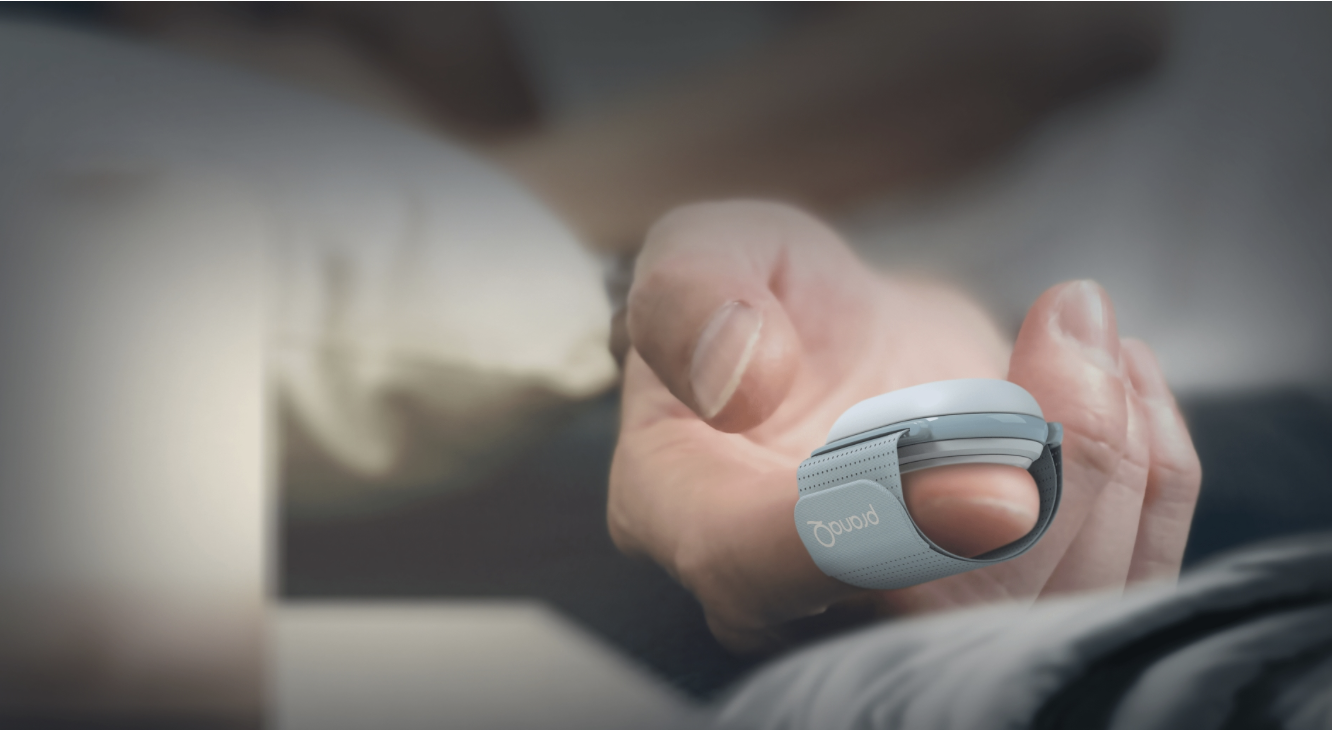
• More healthcare is moving into our homes, resulting in novel – often higher – usability-related safety risks.
• The ever-evolving regulatory framework (e.g. MDR, GDPR, EU AI Act, FDA's evolving digital health framework) adds additional layers to product development.
Medical devices are becoming smaller and more user friendly thanks to increasing human factors efforts yet developing them is becoming far more complex. Modern MedTech products combine hardware, software and cloud connectivity into one integrated system, forming the Internet of Medical Things (IoMT)
Daniel Laszlo-Deli
From Standalone Devices to Connected Systems
Medical devices used to function largely as standalone tools. A monitor measured data, a pump delivered therapy, and the system rarely extended beyond the physical product.
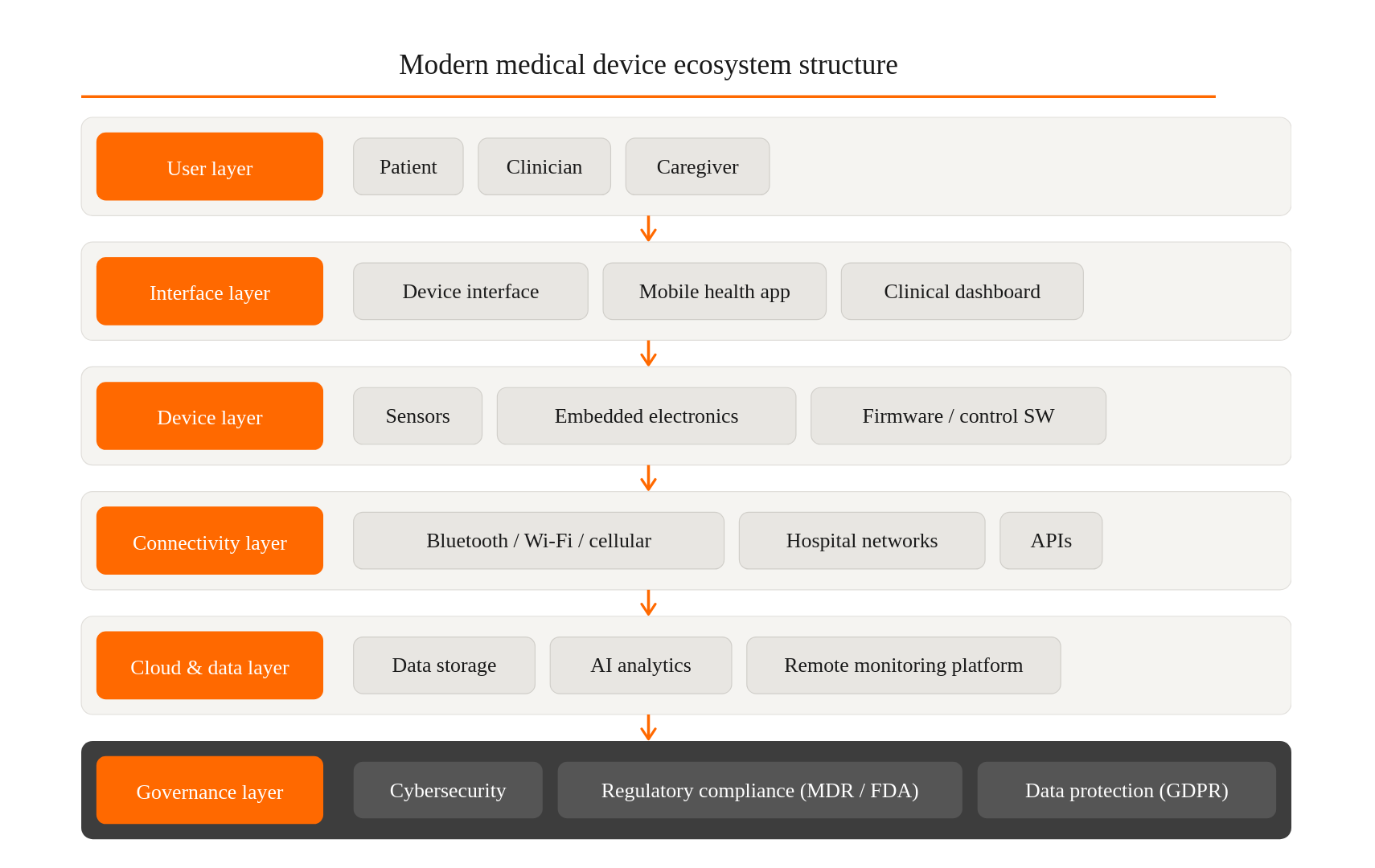
Today, most devices operate as part of a broader ecosystem. A single product may include embedded electronics, mobile applications, cloud infrastructure, and integration with clinical systems.
This shift means product development teams are no longer designing just a device. They are building an interconnected product ecosystem
Software Became Central to MedTech
Software has become one of the fastest-growing components of medical technology, and in many devices, it now performs the diagnostic or monitoring function itself.
This introduces challenges well beyond traditional engineering. Medical software must interoperate with hospital systems, cloud platforms, and AI-driven analytics, where each integration point adds complexity and regulatory burden. IEC 62304 further requires treating software as a continuously managed system, with change control and traceability obligations which often result in 1.000+ page documentation packages for higher risk-class medical software.
Devices are no longer static products. They evolve through controlled updates, and that ongoing lifecycle must be actively managed long after release.
“Modern medical devices may look simple, but behind that simplicity sits a highly complex system of hardware, software, data, and regulatory requirements. The real challenge today is integrating all these elements into a product that is safe, usable, and ready for production.”
Harm Hogenbirk, Co-founder of Pilotfish
Connectivity Brings Cybersecurity Challenges
Connected medical devices often exchange data with private smartphones, hospital infrastrucutres, electronic health record systems, and cloud platforms. While connectivity enables remote monitoring and better clinical insights, it also introduces cybersecurity risks.
Manufacturers need to design devices with security built in from the start. This includes secure data transfer, authentication systems, long-term vulnerability management, and the integration of cybersecurity hazard control into the broader ISO 14971-based risk management approach.
In a world where sensitive patient information is increasingly moving outside hospital walls to enable remote monitoring and healthcare system optimization, cyberattacks on medical infrastructure are becoming an expected reality. The increasingly common Russian cyber-attacks on US healthcare infrastructure, or the recent pro-Iran cyberattack on Stryker show that the threat is no longer theoretical. It is increasingly becoming a cornerstone of patient safety.
Home Care Raises Novel Usability Challenges
As mentioned earlier, healthcare delivery is gradually shifting from hospitals to homes. Remote monitoring systems, wearable sensors, and connected diagnostic tools allow patients to manage conditions outside clinical environments, reduce pressure on healthcare institutions, and improve quality of care for millions of patients worldwide.
However, this shift introduces human factors challenges that are fundamentally different from those of traditional clinical devices. When data flows continuously from the home into hospital systems, it must integrate seamlessly into existing clinical workflows without adding burden to already stretched care teams. Poorly designed data handoffs, alert systems, and reporting interfaces can create as many problems as they solve.
At the same time, these devices are often operated by elderly, cognitively or physically impaired users with no clinical training. This raises the bar for intuitive design considerably. Usability engineering and human factors, structured under IEC 62366-1, are therefore no longer a finishing step in development. They are a core design discipline from the earliest stages of product definition.
Regulation Is Expanding with Innovation
Alongside technological advances, regulatory requirements are expanding in both scope and complexity. The EU Medical Device Regulation (MDR) introduced significantly stricter requirements around clinical evidence, safety documentation, post-market surveillance and a spectrum of other topics. And MDR is only one layer of an increasingly dense regulatory stack.
Manufacturers developing software-driven or AI-enabled devices must also navigate the EU AI Act, which classifies many medical applications as high-risk AI systems with their own conformity assessment and transparency obligations. GDPR adds further complexity, governing how patient data is collected, stored, and transferred, creating tension with MDR's post-market data retention requirements that manufacturers must actively manage.
In parallel, despite of the generally looser regulatory landscape, FDA guidance on Software as a Medical Device and cybersecurity documentation is raising the bar for US market access, and the trajectory of global regulators is broadly converging in the same direction.
The result is that compliance can less and less be treated as a downstream activity. With multiple frameworks intersecting across safety, software, AI, and data privacy, a regulatory strategy must be embedded into product development from the outset.
What This Means for Product Development
The paradox of modern MedTech is clear.
Devices are becoming smaller, cleaner, and easier to use. Yet behind that simplicity lies a growing level of complexity.
Successful products today require the seamless integration of multiple disciplines: electronic and mechanical engineering, firmware and software development, industrial and UX design, human factors and usability engineering, regulatory expertise, and manufacturing expertise. All running under one integrated Quality Management System.
The challenge is no longer just building the device. It is the Innovation management of orchestrating the entire system around it.
Don’t miss what’s next in product development
You may also find interesting

Pilotfish Inc. Earns 2026 D&B SME Elite Award
Pilotfish has been selected as one of Taiwan’s Top 1,000 SMEs in the 2026 Dun & Bradstreet SME Elite Award (鄧白氏中小企業菁英獎), recognising Pilotfish Inc. among a select group of companies demonstrating sustained business performance, international competitiveness, financial soundness and long-term development potential.

.webp)
From Prototype to Production: Why an Integrated Product Development Partner Makes the Difference
Discover why successful hardware products require more than great technology. Learn how an integrated product development approach reduces risk, accelerates time-to-market, and transforms prototypes into scalable, production-ready products.
Why wait months to launch?
From concept to production, we help teams bring products to market faster - without compromising quality or compliance.
What innovators often ask us
This is some text inside of a div block.
Pilotfish helps teams integrate product strategy, industrial design, UX, engineering, human factors, regulatory thinking, and manufacturing into one development process, helping bring complex medical devices closer to safe, usable, and production-ready products.
This is some text inside of a div block.
Connected medical devices may need to comply with several overlapping frameworks, including MDR, GDPR, IEC 62304, IEC 62366-1, ISO 14971, the EU AI Act, and FDA guidance for software and cybersecurity.
This is some text inside of a div block.
Usability directly affects patient safety, especially as more devices move into home care environments. Devices must be intuitive for non-clinical users, including elderly patients or people with physical or cognitive limitations.
This is some text inside of a div block.
Modern medical devices are no longer just physical products. They often combine hardware, embedded software, mobile apps, cloud platforms, data systems, and regulatory requirements into one connected ecosystem.