From Lab-on-a-Chip to Real Product: What It Takes to Scale Portable Labs
Lab-on-chip and portable diagnostics are transforming healthcare, agriculture, and environmental monitoring. But turning advanced chip technology into real, usable products remains a major challenge. This article explores where the complexity lies and what it takes to bring these devices to market.

Article hightlights
• Portable labs reduce time, cost, and dependency on central facilities
• The biggest challenge is not the technology, but productization
• Environmental conditions and usability are critical constraints
• Successful devices balance precision, usability, and manufacturability
The Promise of Portable Labs
The idea is simple.
Shrink a laboratory into a handheld device.
Advances in microfabrication and nanotechnology have made it possible to integrate complex analysis into a single chip. The result is faster diagnostics, real-time data, and reduced reliance on centralized labs.
This shift is already visible in everyday tools, from pregnancy tests to COVID-19 diagnostics.
But the real impact goes further.
Portable labs enable:
on-site decision-making
faster response times
more efficient resource allocation
The technology works.
Turning it into a product is where things become difficult.
Why Productization Is the Real Challenge
A working chip is not a product.
It is a component.
The challenge lies in integrating complex sensing technologies into devices that people can actually use in uncontrolled environments.
Portable lab devices must balance:
precision and reliability
environmental resistance
usability for non-experts
regulatory compliance
Each of these introduces trade-offs.
Improving one often complicates another.
Case Studies: From Technology to Product
Real-world projects highlight how these challenges play out.
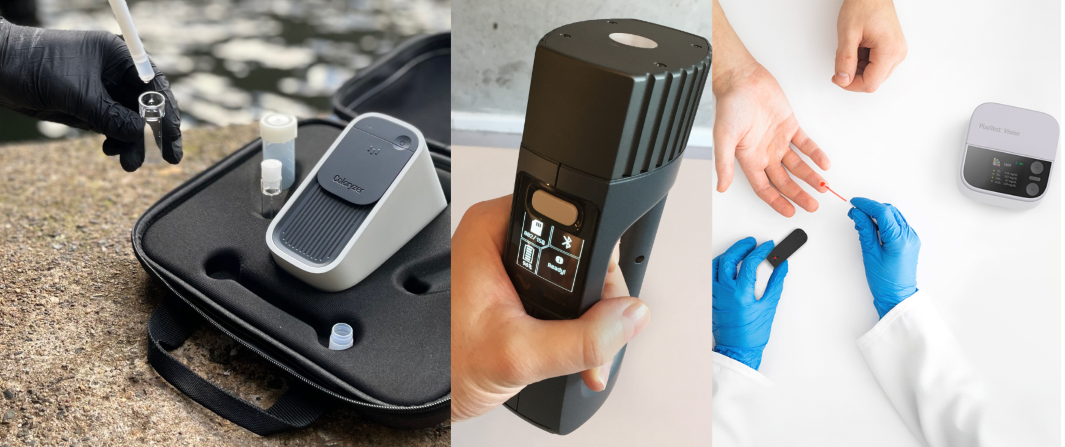
NeoSpectra: Grain Analysis in the Field
Client: Si-Ware Systems https://www.si-ware.com/
This handheld analyzer uses MEMS-based spectroscopy to assess grain quality.
The challenge was thermal stability. The sensors required controlled temperatures, while the device needed to operate in harsh agricultural environments.
The solution involved careful thermal management without compromising durability, ergonomics, or usability.
Coloryzer: Accurate Water Analysis
Client: Ayxon-Dynamic https://www.coloryzer.com/
Optical colorimetry requires controlled lighting conditions.
The challenge was to achieve laboratory-level darkness in a portable device.
The solution was a magnetic sliding mechanism that ensured consistent measurement conditions while remaining intuitive and easy to use.
PixoTest: At-Home Diagnostics
Client: iXensor https://www.ixensor.com/ixensor_web/
These devices transform smartphones into diagnostic tools.
The challenge was variability. Different phone designs, user behaviors, and contexts required a flexible solution.
The result was an adaptive design system that maintained usability across devices while enabling reliable diagnostics.
What Makes These Devices Work in the Real World
Across different applications, the same core challenges appear.
Environmental Control
Laboratory conditions are stable.
Real-world environments are not.
Devices must account for temperature, humidity, dust, and unpredictable usage.
Usability for Non-Experts
These devices are no longer used only by trained professionals.
They must be intuitive, clear, and error-resistant.
Early User Testing
Assumptions about usability often fail.
Testing with real users early helps identify friction points before they become costly problems.
Compliance
Certification requirements influence design decisions from the start.
Delaying compliance leads to redesign and delays.
From Prototype to Production
Prototyping is not about proving success.
It is about uncovering failure.
Each prototype should answer a specific question, whether technical, usability-related, or commercial.
A pilot run then validates the full system under real production conditions.
This includes:
manufacturing processes
quality control procedures
supply chain alignment
Without this step, scaling introduces risk.
The Reality of Mass Production
Even with preparation, challenges remain.
Consistency becomes critical.
Component shortages, supplier variability, and production deviations can impact quality.
Strong quality control systems and clear processes are essential to maintain reliability at scale.
Conclusion
Portable lab technology has enormous potential.
But the technology alone is not enough.
Success depends on the ability to turn complex systems into products that work reliably, intuitively, and consistently in the real world.
That is where most projects succeed or fail.
Don’t miss what’s next in product development
You may also find interesting
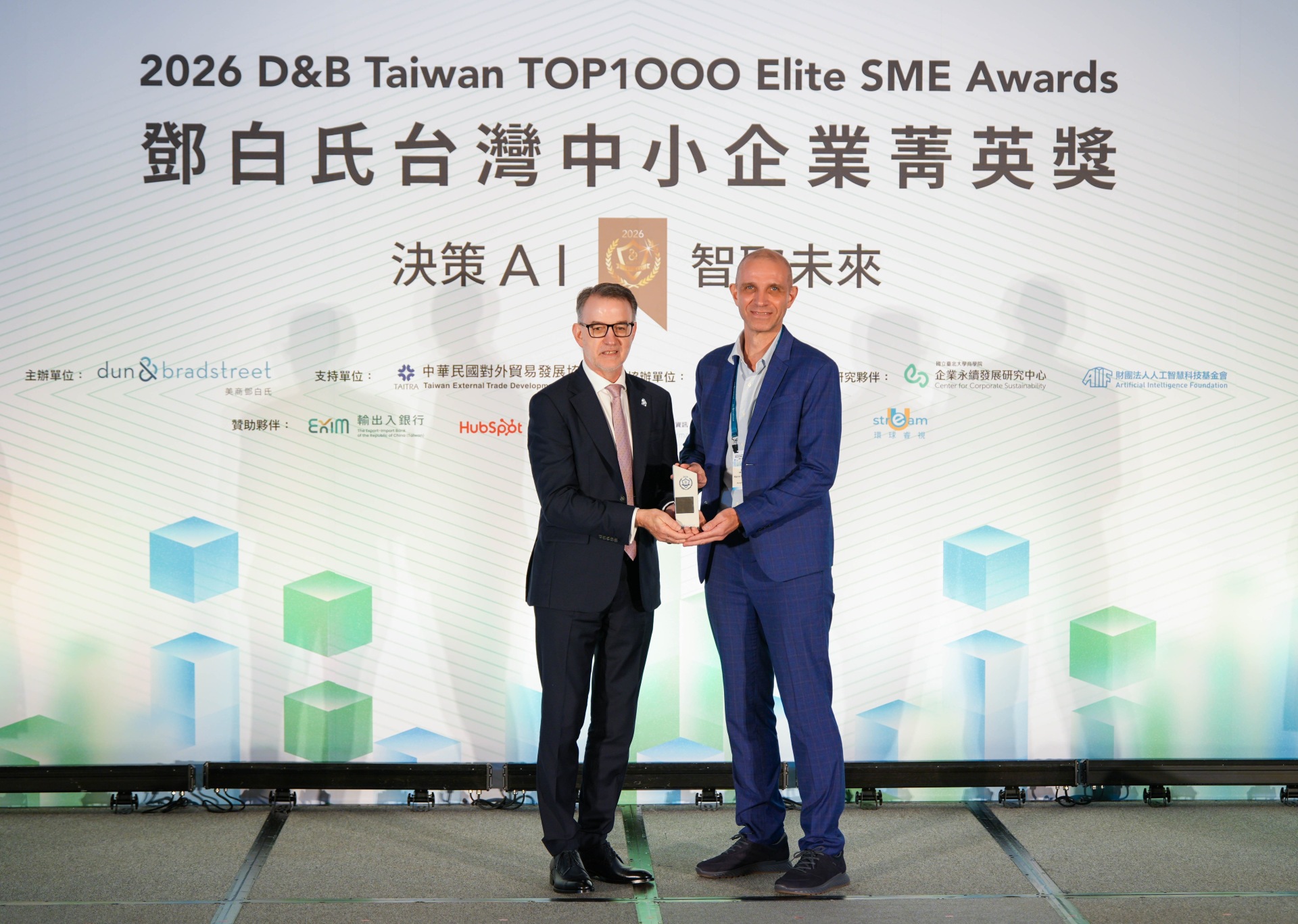
Pilotfish Inc. Earns 2026 D&B SME Elite Award
Pilotfish has been selected as one of Taiwan’s Top 1,000 SMEs in the 2026 Dun & Bradstreet SME Elite Award (鄧白氏中小企業菁英獎), recognising Pilotfish Inc. among a select group of companies demonstrating sustained business performance, international competitiveness, financial soundness and long-term development potential.
.webp)
From Prototype to Production: Why an Integrated Product Development Partner Makes the Difference
Discover why successful hardware products require more than great technology. Learn how an integrated product development approach reduces risk, accelerates time-to-market, and transforms prototypes into scalable, production-ready products.
Why wait months to launch?
From concept to production, we help teams bring products to market faster - without compromising quality or compliance.
What innovators often ask us
This is some text inside of a div block.
Because many devices are used by non-experts in real-world conditions.
This is some text inside of a div block.
Turning advanced technology into usable, reliable products.
This is some text inside of a div block.
Healthcare, agriculture, environmental monitoring, and food safety.
This is some text inside of a div block.
It integrates laboratory functions into a small, portable device.