Ultrawearables: The Next Frontier of Smart Textiles
Smart textiles are evolving into ultrawearables, garments that integrate sensing, computing, and intelligence directly into fabric. This shift is redefining how we interact with technology, while raising new technical and ethical challenges.

Article hightlights
• Technology is moving from devices to materials
• Textiles are becoming interfaces, not carriers
• Healthcare and performance are key drivers
• Ethics and lifecycle design remain unresolved
What Are Ultrawearables
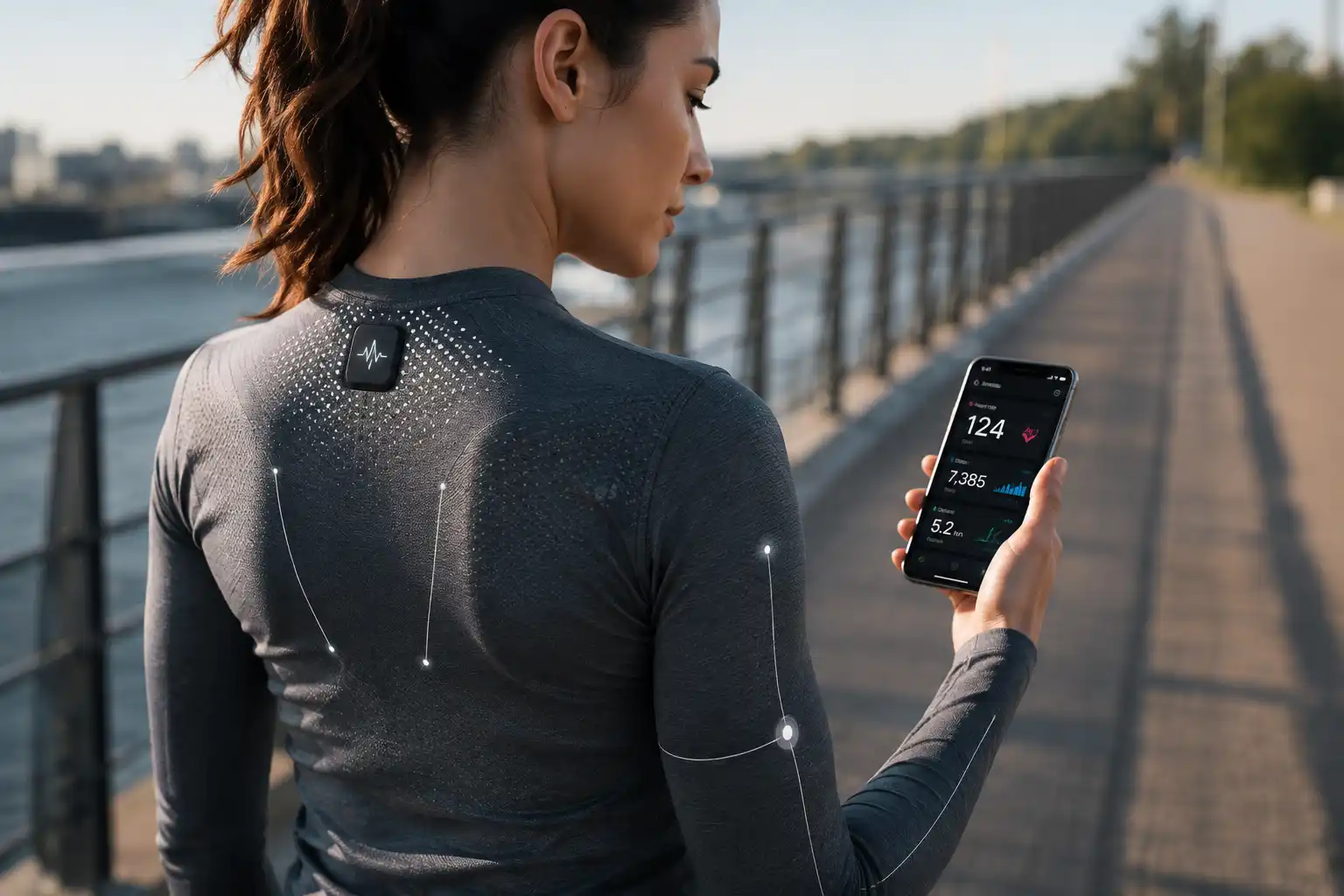
Wearables are no longer devices attached to the body. They are becoming part of it. Ultrawearables represent a new category of smart textiles where sensing, processing, and communication are embedded directly into garments, enabling continuous interaction between the body and digital systems.
This evolution moves from passive fabrics that respond to environmental conditions, to active textiles with sensors and actuators, and now to fully integrated systems capable of collecting, processing, and transmitting data. Over the past two decades, this progression has shifted from external accessories to hybrid systems, and now toward garments with embedded intelligence and AI capabilities.
The Technology Shift
The key shift is simple but profound: intelligence is moving into the material itself. Advances in flexible electronics, conductive polymers, and low-power computing are enabling textiles that are stretchable, breathable, and functional in real-world conditions.
Research led by Yoel Fink at MIT introduces fiber-based computers that can process data directly within yarn, enabling garments to monitor posture, temperature, and movement without external devices.
At the same time, companies like MotorSkins are developing soft exosuits for movement support, while AiQ Smart Clothing integrates ECG monitoring into everyday garments. Research institutions such as Taiwan Textile Research Institute are advancing stretchable biosensing materials that make these systems scalable.
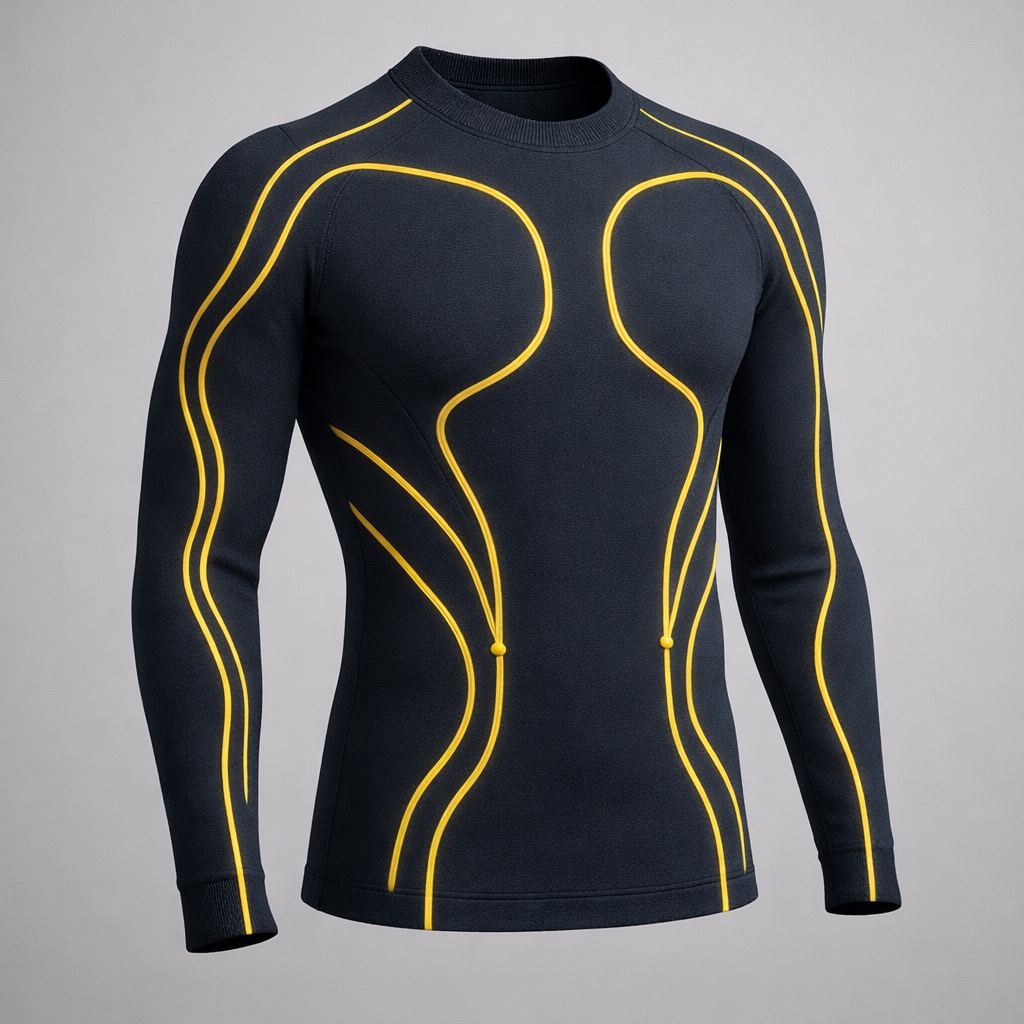
At Pilotfish, projects like the Antelope EMS Suit demonstrate how electronics, design, and user experience can merge into embodied functionality. The direction is clear: fabric is becoming the interface.
Market Momentum
Smart textiles are moving beyond niche applications into healthcare, sports, and industrial use, with the market projected to reach $15.9 billion by 2030.
Startups are driving this shift. Smartex, led by Gilberto Loureiro, uses AI to detect defects in textile production in real time, reducing waste and resource use. However, adoption depends on measurable value. Innovation must translate into efficiency, cost savings, or improved outcomes to scale.
Challenges and Ethics
As technology moves closer to the body, complexity increases. Questions around data ownership, privacy, and medical classification become unavoidable, while practical issues such as durability, washing, repairability, and recycling remain unresolved.
Researchers like Katharina Bredies highlight that electronic textiles are still fragile, expensive, and difficult to maintain. These are not limitations, but design challenges that require better lifecycle thinking.
At the same time, biometric data and AI introduce risks around bias, surveillance, and user control. As the interface moves from screen to skin, ethical responsibility becomes part of the design process.
What Comes Next
Ultrawearables will move beyond monitoring into active systems that respond in real time. Garments will adapt to physiological signals, support movement, and integrate into healthcare ecosystems.
Imagine clothing that regulates stress, detects early health risks, or enhances physical performance. Many of these technologies already exist in fragments. The challenge is integrating them into products that are reliable, intuitive, and widely adopted.
Conclusion
Ultrawearables represent a shift from devices to materials, and from interaction to embodiment. The future of design lies in creating systems that are not only functional, but seamlessly integrated into human behavior.
The next step is not just smarter garments, but technology that disappears into everyday life while enhancing it in meaningful ways.
Don’t miss what’s next in product development
You may also find interesting

Pilotfish Inc. Earns 2026 D&B SME Elite Award
Pilotfish has been selected as one of Taiwan’s Top 1,000 SMEs in the 2026 Dun & Bradstreet SME Elite Award (鄧白氏中小企業菁英獎), recognising Pilotfish Inc. among a select group of companies demonstrating sustained business performance, international competitiveness, financial soundness and long-term development potential.


From Prototype to Production: Why an Integrated Product Development Partner Makes the Difference
Discover why successful hardware products require more than great technology. Learn how an integrated product development approach reduces risk, accelerates time-to-market, and transforms prototypes into scalable, production-ready products.
Why wait months to launch?
From concept to production, we help teams bring products to market faster - without compromising quality or compliance.
What innovators often ask us?
This is some text inside of a div block.
Core technologies already exist, but widespread adoption will depend on cost, usability, and clear real-world value, especially in healthcare and performance applications.
This is some text inside of a div block.
Not the technology itself, but turning it into a real product, ensuring durability, comfort, washability, scalability, and regulatory compliance.
This is some text inside of a div block.
Traditional wearables are separate devices worn on the body. Ultrawearables integrate technology into textiles, making interaction seamless, continuous, and less visible.
This is some text inside of a div block.
Ultrawearables are garments with fully integrated technology, where sensing, processing, and communication are embedded directly into the fabric rather than added as external devices.