You Have an Idea. Now What?
This article gives founders a practical framework for matching development stage, investment level, and the next milestone, including concrete entry points such as the Scoping Workshop, Product DNA Workshop, and staged development.

Article hightlights
- Start with the Problem, Not the Product
- Aligning Your Development with Your Capital Roadmap
- How Pilotfish Meets You at Your Stage
- What to Expect from a Development Partner
- Ready to Take the Next Step?
A Practical Guide to Turning a Startup Idea into a Real Product
You have an idea. You can already see it. You know what it should do. Maybe you have a sketch, a pitch deck, or even a rough initial concept.
And then comes the obvious question: “Can you build this for me?”
This is usually where real work begins. At Pilotfish, we speak to many ambitious startup founders. Some are well-prepared, while others are still at the very beginning. In both cases, the most important rule is not to jump straight into expensive development.
Before writing specifications or committing large budgets, the first question should always be: Have we proven that this is the right problem to solve, for the right people, in a way that can become a viable business?
1. Start with the Problem, Not the Product
Founders are naturally attached to their initial solution, and that is understandable. You have spent days, weeks, or years thinking about it. But your first idea is not necessarily the ultimate solution.
Product development must begin by testing the underlying problem and opportunity.
Ask yourself:
- Who has the problem?
- How are people solving it today?
- What would actually make them change their behaviour?
- Crucially, would somebody pay for it?
Research is much more than a nice-to-have. It helps you discover whether your idea is solving a genuine problem and whether there is a real business opportunity behind it.
2. Aligning Your Development with Your Capital Roadmap
A common misconception is that product development is an all-or-nothing investment. In reality, successful hardware and software development is staged alongside your capital acquisition.
Every development stage has a specific job: to build the evidence needed to unlock the next round of funding.
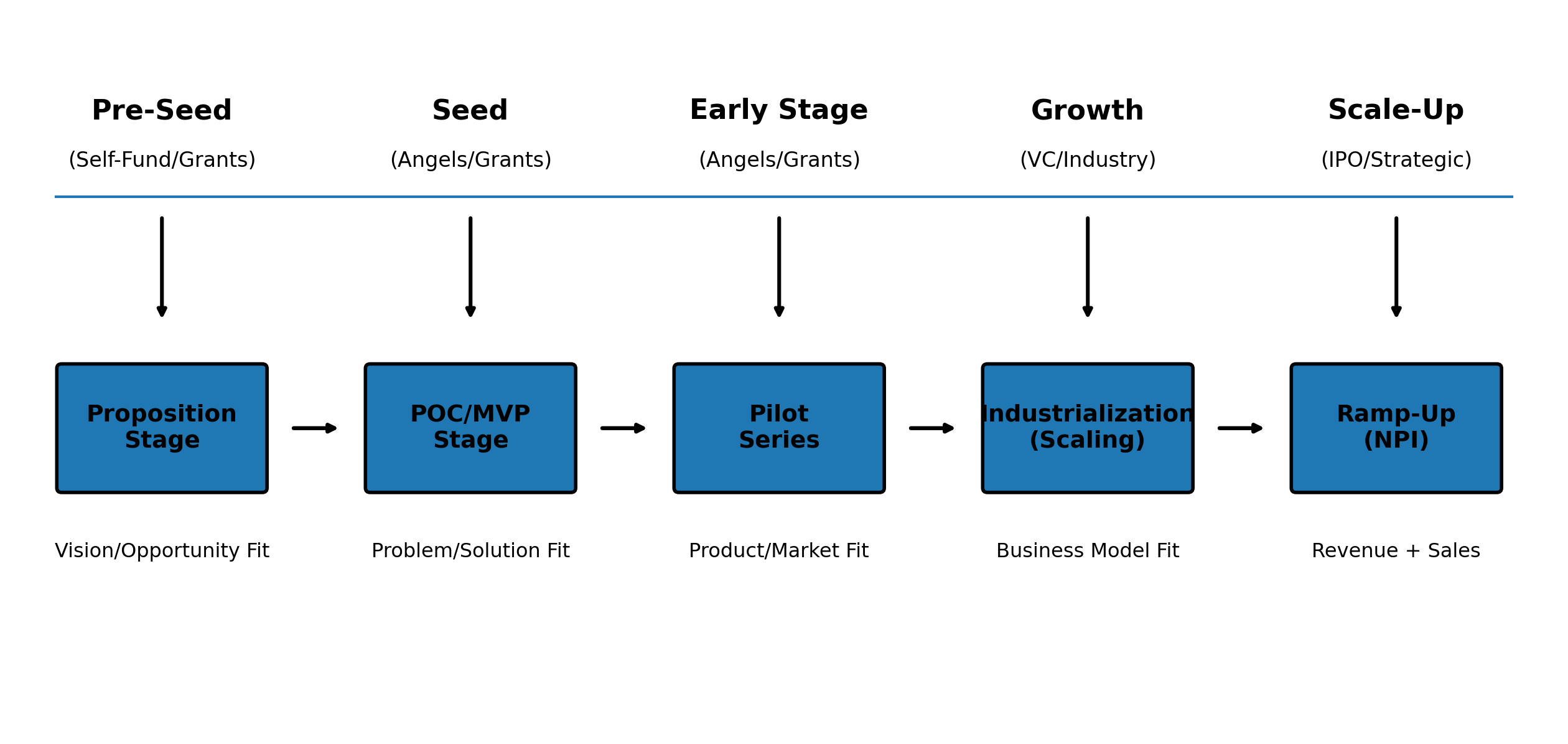
- Proposition Stage (Pre-Seed): Focus on proving the Vision/Ambition Fit. Self-funding, grants, or early community support finance initial market research and purpose definition.
- Proof of Concept / PoC (Seed): Prove the Problem/Solution Fit.
Validate solution hypotheses and build 1:1 volume models or experiential prototypes to demonstrate technical + functional feasibility to angel investors.
- Pilot Series / MVP (Early Stage): Prove Product/Market Fit. Refine the product into a functional Minimum Viable Product (MVP) for real-world testing and Analytics.
- Industrialization & Ramp-Up (Growth / Scale-Up): Prove Market/Business Model Fit. Scale manufacturing, execute New Product Introduction (NPI), and start generating sustainable revenue.
The principle is simple: Do not spend €200,000 and your precious time proving something you could have disproved for €20,000 within weeks or months.
3. How Pilotfish Meets You at Your Stage
Professional product development requires multidisciplinary expertise, tools, and time. But you do not always need to finance the entire journey before you start.
To serve founders responsibly, Pilotfish offers structured entry points depending on your current funding and maturity:
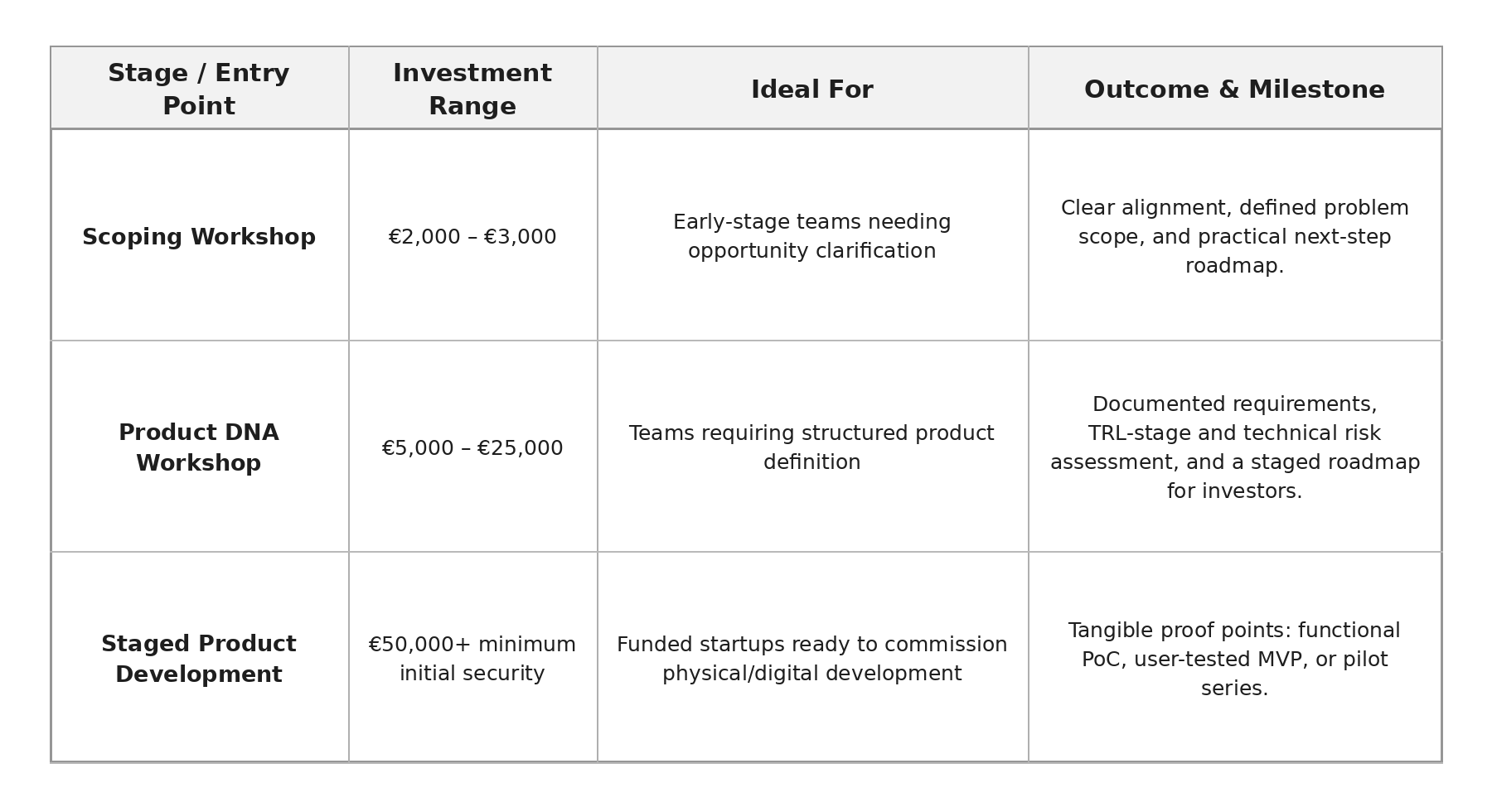
What if you don't have €50k+ available today?
If funding is not available yet, that does not mean your idea is dead. It simply means your immediate job is different.
Before commissioning a major development package, focus on early-stage homework:
- Talk to potential users/customers and collect early feedback.
- Investigate innovation grants, regional subsidies, or angel networks.
- Use smaller engagements, like a Scoping Workshop, to turn loose ideas into concrete requirements that make your fundraising pitch significantly more compelling to investors.
4. What to Expect from a Development Partner
Pilotfish is not just a "pair of hands" executing a fixed checklist. Our role is to challenge assumptions, explore alternatives, and de-risk your investment.
Sometimes the most valuable thing we can tell you is that your proposed solution is not yet the right one. That is not a rejection, it is a vital part of the design process.
We are here to humanize technology: connecting what a product does technically with what users actually need in real-world environments.
Ready to Take the Next Step?
Before reaching out to a development partner, ask yourself five key questions:
- What specific problem are you solving?
- Who is your target user or buyer?
- What evidence do you have that they want your solution?
- What technical or market assumptions have you already proven?
- What resources or funding are available for your next milestone?
You don’t need to have all the answers mapped out perfectly. But being ready to work on them is where the conversation becomes interesting.
Bring us your problem, your ambition, and your current findings. Together, we can determine the smartest, most cost-effective path toward a real product.
Don’t miss what’s next in product development

You may also find interesting
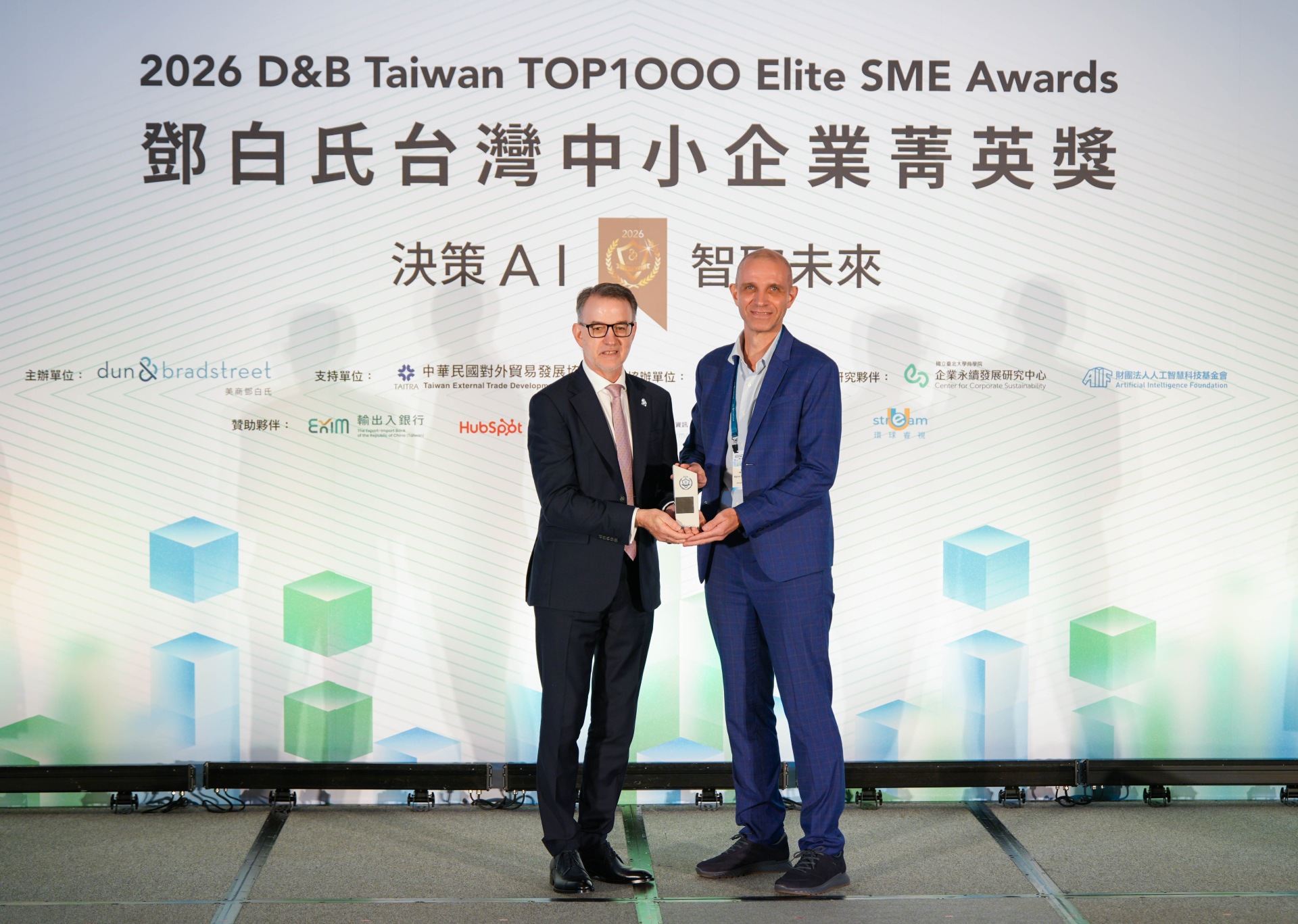
Pilotfish Inc. Earns 2026 D&B SME Elite Award
Pilotfish has been selected as one of Taiwan’s Top 1,000 SMEs in the 2026 Dun & Bradstreet SME Elite Award (鄧白氏中小企業菁英獎), recognising Pilotfish Inc. among a select group of companies demonstrating sustained business performance, international competitiveness, financial soundness and long-term development potential.
From Prototype to Production: Why an Integrated Product Development Partner Makes the Difference
Discover why successful hardware products require more than great technology. Learn how an integrated product development approach reduces risk, accelerates time-to-market, and transforms prototypes into scalable, production-ready products.
Why wait months to launch?
From concept to production, we help teams bring products to market faster - without compromising quality or compliance.
What innovators often ask us
This is some text inside of a div block.
Pilotfish supports startups at different stages of maturity, from early opportunity exploration and product definition to Proof of Concept development, MVP creation, and industrialization. The goal is to help founders make informed decisions, validate assumptions, and invest in development in a staged and financially responsible way.
This is some text inside of a div block.
A Proof of Concept (PoC) is designed to demonstrate that a solution is technically and functionally feasible. An MVP, or Minimum Viable Product, is a more refined product that can be tested with real users to evaluate product-market fit and gather meaningful feedback. Both stages help de-risk investment before scaling.
This is some text inside of a div block.
Not necessarily. While full product development projects typically require substantial funding, many startups begin with smaller strategic engagements such as scoping workshops or product definition exercises. These activities require up to 20K funding and help founders clarify requirements, identify risks, and strengthen their case for investors or grant applications.
This is some text inside of a div block.
Before committing significant development budgets, you should validate key assumptions about your customers, market, and technology. Activities such as user interviews, market research, concept testing, and feasibility assessments can help reduce risk and prevent costly mistakes later in the development process.
This is some text inside of a div block.
The first step is to validate the problem, not the solution. Speak with potential users, understand how they currently address the problem, and determine whether they would be willing to pay for a better alternative. Product development should only begin once there is evidence that a real market need exists.